- Air Source Heat Pumps
- Renewable Heating Incentives
- …
- Air Source Heat Pumps
- Renewable Heating Incentives
- Air Source Heat Pumps
- Renewable Heating Incentives
- …
- Air Source Heat Pumps
- Renewable Heating Incentives
Air Source Heat Pump Maintenance, Servicing and Repair

Air Source Heat Pump Mantenance
Air source heat pumps use well-established technology, and you should expect a working life, and for it to remain efficient for 20 - 30 years, certainly longer than a boiler.
The good thing about air source heat pumps is that they don’t need a huge amount of user maintenance. Every unit will be different, of course, but Blueflame will advise what the manufacturer's exact unit requirements are in regards to annual or seasonal maintenance.
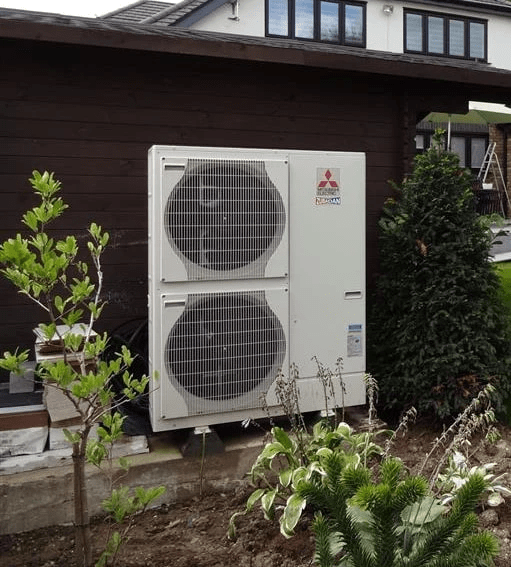
The main thing is to be sure that there’s a plentiful supply of air. This means regularly checking for leaves or rubbish caught in the fans grille. also pruning back any plants growing too close to the unit or its pipework. In very cold weather, you'll need to make sure you clear snow from the air source heat pump and check that the grilles aren’t blocked by ice. We have elaborated more on our air source heat pump maintenance checklist below ...
Air Source Heat Pump Maintenance Checklist
To get the most out of your air source heat pump investment we recommend carrying out the following each points below.
Frequent maintenance (such as getting rid of bacteria and odours by unclogging filters, fan blades and coils) reduces the chance of breakdown or need of repair. It also importantly helps maintain energy efficiency, reducing energy consumption (and your carbon footprint), lowers ongoing operating costs and enable your heat pump to last longer.
While air source heat pumps can vary in shape and size (such as manufacturer style, technical capability, mounting location etc,) there are very few differences when it comes to maintaining them. Below we’ve listed a some easy but effective techniques to help you look after your air source heat pump.
Importantly remember - before you do anything - ensure you turn off the heat pump – so as to avoid any electrical faults or safety issues.
1. Keep your air source heat pump clean
Keeping your air source heat pump clean will help it last longer and enable it to continue working efficiently.
Some key cleaning techniques include:
- Wiping down the coils
Use a soft brush to remove dust and debris from the coils, and then give them a wipe with a damp cloth - Replacing filters every 30-60 days
By doing this, you can prevent any blockages to the airflow. You can also clean the filters by removing them from the heat pump, vacuuming the dust off, and soaking them in some mild detergent - Removing the fan blades and wiping away dirt
Similar to the coils, use a soft brush to get rid of dust and debris, and then give the blades a wipe with a damp cloth. If the fan belt looks a little loose, you can always adjust or tighten it - Cleaning the registers
These are just grilles with moving parts, which allow them to be opened and closed depending on the airflow. To clean them, all you have to do is use a soft-bristled brush to clear dust, pet hair, and other light debris
2. Remove any obstructions from your air source heat pump
Free airflow is critical when it comes to your air source heat pump operating effectively and efficiently. Even a blade of overgrown grass starting to encroach the unit alter the difference in temperature.
Two key ways to avoid obstructions getting in the way of your heat pump include:
- Removing encroaching grass, stray leaves, dirt, and other debris
It’s a good idea to keep the area around your heat pumps cut back and as clean as possible - De-icing your unit
During winter months, the outdoor unit can get iced over, which can prevent the transfer of heat between the refrigerant (a substance that absorbs and rejects heat as it circulates in the heat pump system) and the air. Some models even have a defrost setting that gradually melts the ice to help with this issue
3. Inspect your air source heat pump regularly
Inspecting your air source heat pump regularly is simply good practice to ensure its effective and efficient operation too.
Here are three areas to inspect.
- Check the outdoor unit for visible leaks
Most heat pumps have a drain pan that is used to collect condensation from the unit. If this pan becomes clogged with debris, mould, or even algae, it could overflow and create a puddle around your heat pump. So don’t panic if you see a leak – a simple cleaning job could fix it in a matter of minutes - Refill glycol (antifreeze)
This prevents the unit from freezing up and breaking during the winter. In most cases, you’ll need to refill the antifreeze annually to cover the warranty from the manufacturer. This can be requested in your air source heat pump service. - Monitor the system’s water pressure
You should check the pressure when the system is cold, and aim to have the gauge around the 0.7 bar for a bungalow, and around the 1.2 bar for a two-storey house. We will advise you of this information as part of our post installation familiarity overview with you.
4. Test the controls of your air source heat pump
We recommend checking that all the electrical controls are working in your heat pump system every now and then. Here are a few pointers
- This can be as easy as taking note of how your thermostat and TRVs (thermostatic radiator valves) are responding.
- It’s also key to check that the pressure valves are working when you turn up the heat.
If you notice a fault, it’s worth calling us out to determine whether something has gone wrong in the internal system. - If your heat pump provides hot water as well as space heating, it’ll probably have a two-channel controller, which programmes different temperatures and
times for each setting. Every few months, you’ll want to monitor how the controls are working, checking that the temperature is correct.
5. Get your air source heat pump serviced
We generally recommend hetting your air source heat pump serviced by one of our ASHP engineers every 2 - 3 years HOWEsome warranties will require this to be done annually. We will advise you of this post installation
We also recommend getting your heat pump serviced before winter. This way, if any issues are discovered, you won’t be left without an efficient heating supply during the cold months. During an inspection, our ASHP engineer will conduct a comprehensive audit of the system, including:
- Refilling the amount of refrigerant if it’s running low
- Assessing water pressure levels
- Checking ducts for leakage, and repairing them if need be
- Measuring the airflow to see if it is at a sufficient level
- Inspecting indoor coils, filters, and blowers for dirt and other debris
- Lubricating motors and moving belts
- Looking out for any wear and tear
- Making sure the heating controls are operating properly
- Testing the thermostat is responding properly
- Wiping down the coils
Air Source Heat Pump Servicing and Repair

Air Source Heat Pump Servicing and Repair
Just like a boiler, you should get your air source heat pump professionally serviced annually by Blueflame, not only to guarantee the performance of your system and prolong its lifetime which will save you money - but to keep manufacturers warrantees valid as they are only upheld if your air source heat pump is serviced on an annual basis by a qualified engineer. It is also an RHI regulation that your system is regularly serviced throughout the 7 years of the Renewable Heat Incentive payback.

In a hybrid system, your gas, oil or LPG boiler will need annual servicing as usual, as part of this process the engineer will check the boiler pressure and you may need to bleed the radiators every couple of years (if you have them) - but certainly nothing different than would usually be advised.
Ideally before the winter (or summer if used for cooling) is the time to have your air source heat pump serviced by Blueflame. Our air source heat pump engineers will conduct a more advanced audit of the components and identify issues that could degrade the heat pump’s performance, which a user would not necessarily spot or be able to diagnose. These checks will comprise of the following:
- Check ducts for leakage and repair if necessary
- Inspect filters, ducts, blower and indoor coil for dirt and other obstructions
- Measure airflow is correct
- Check refrigerant levels and pressure
- Check all electrical contacts and ensure they are protected from the elements
- Check for system leaks
- Check reverse heating / cooling controls and verify they are operating as required
- Lubricate moving belts, motors and check for damage / wear and tear
- Check and test thermostat under normal operating conditions.
For the most part and unlike other renewable energy technologies, such as solar PV and wind turbines which use costly inverters, heat pumps do not generally require the replacement of expensive parts during their lifetime.
Gasway Services Limited is registered in England and Wales No. 04158628.
Trading address is 31 King Street, Norwich, Norfolk, England, NR1 1PD.
Part of Flagship
© Copyright 2018 - 2025. Gasway Services Ltd. All Rights Reserved.
Local Offices :
Norwich: 18 Burnett Road. Norwich. NR3 2BS
Tel: 0800 074 3030
Colchester: 2 Commerce Park. Whitehall Industrial Estate. Colchester. Essex. CO2 8HX.
Tel: 01206 799994
Letchworth : Devonshire Business Centre, Works Rd. Letchworth. Herts. SG6 1GJ
Tel: 01462 480817
Email: ColchesterSales@gasway.co.uk
See our other websites:
- Gasway Main Site
- Gasway Commercial Services
- Gasway Colchester